Why trailer checks need their own record
A trailer has its own tyres, lights, bodywork, coupling and load security to check, and its own defects.
When all of that gets filed under whichever vehicle pulled it that day, you can’t easily see the condition of the trailer itself.
Who the trailer inspection app is for
Hauliers running HGV trailers, plant hire firms, trades and site teams that run trailers as working assets.
Especially where trailers are shared, move between depots, or get checked by different drivers through the week.
Trailer notes on the towing vehicle’s sheet
Trailer notes squeezed onto the vehicle sheet, a separate paper checklist, or drivers sending a photo when something looks wrong.
The trailer’s history ends up split between vehicle files, chats and folders.
Where trailer inspection history gets lost
A trailer can be pulled by five different vehicles in a month. Filing its checks against the towing vehicle hides the trailer’s real history.
When a defect turns up, you need to know which trailer it was on and what was found at its last check.
How trailer inspections work in AutoMauve
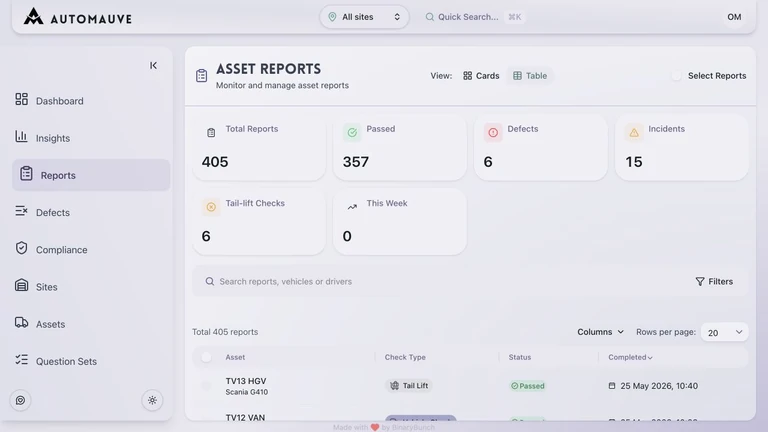
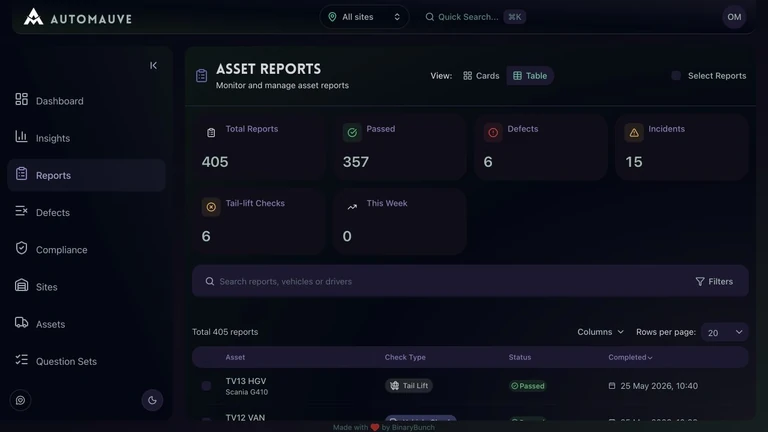
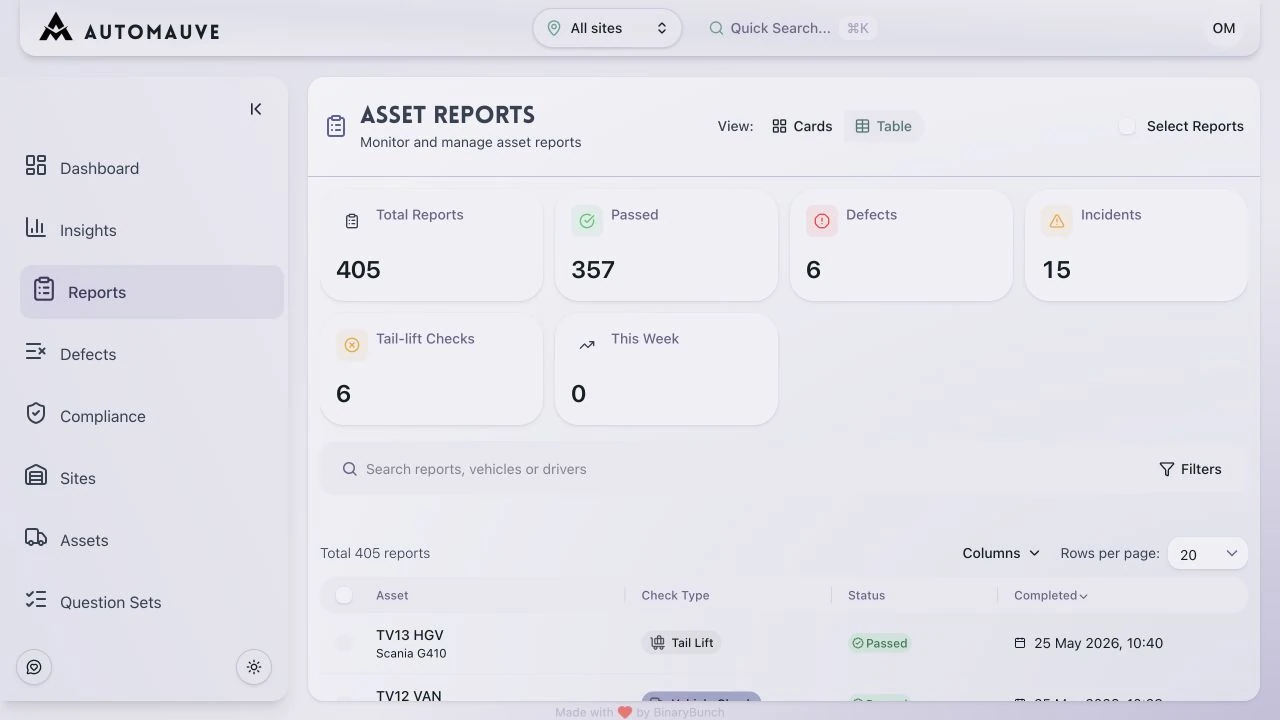
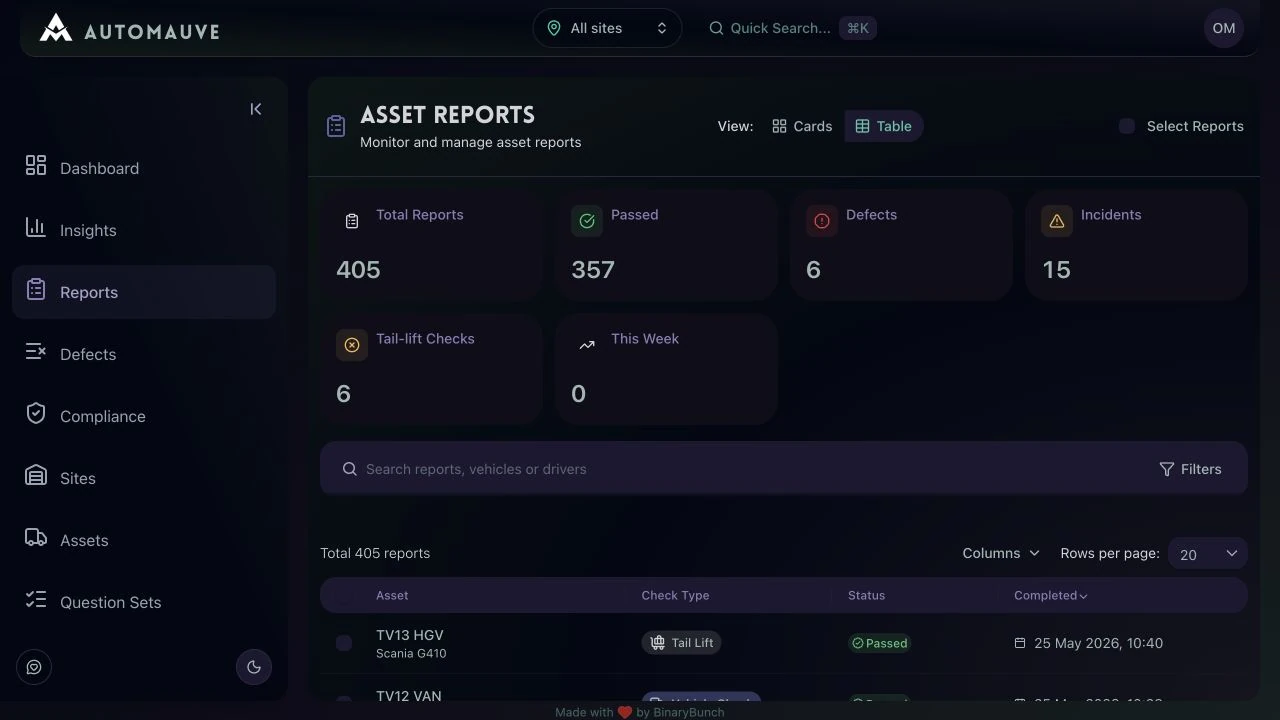
In AutoMauve trailers are separate records, each with its own ID, type, site and check frequency. Drivers add the trailer when they start the vehicle check.
The report records which trailer was attached, so you can look back at checks by trailer as well as by vehicle, whichever unit it was coupled to that day.
A trailer inspection, day to day
- 1Add your trailers with their ID, type and check frequency.
- 2Drivers select the trailer when they start the vehicle check.
- 3Failed items get a note and photos.
- 4Look up the trailer’s own history when a defect or question comes up.