Why vehicle defects get reported badly
Drivers usually find defects during the walkaround check, at the busiest point of the day, standing next to the vehicle and wanting to get going.
If the report is vague or sits apart from the check, someone has to work out what happened and whether the vehicle can still be used.
Who the defect reporting app is for
Managers and transport managers who need to keep vans, HGVs and trailers on the road without waving through a genuine defect.
And drivers who want to report a problem properly without writing an essay after their shift.
Photos on WhatsApp and notes on the sheet
Photos sent on WhatsApp, notes on the paper sheet, an email to the office, or a spreadsheet updated back at the desk.
Someone then has to match that defect to the vehicle, the check, the date, the driver, how serious it is, and what was done about it.
Where defect reports get lost
Photos arrive without context, messages get buried, and handwritten notes get separated from the repair.
When someone later asks whether a defect was looked at, fixed or is still open, the answer is spread across three places.
How defect reporting works in AutoMauve
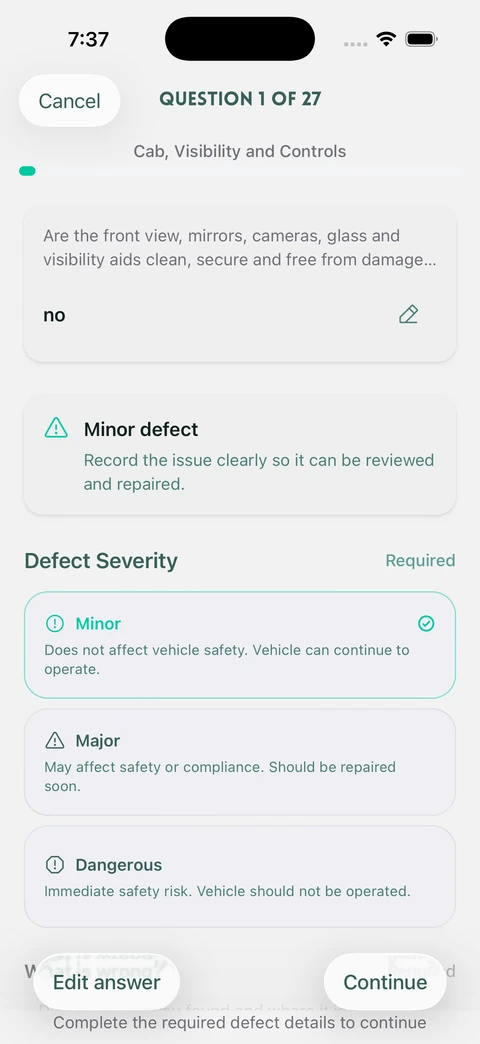
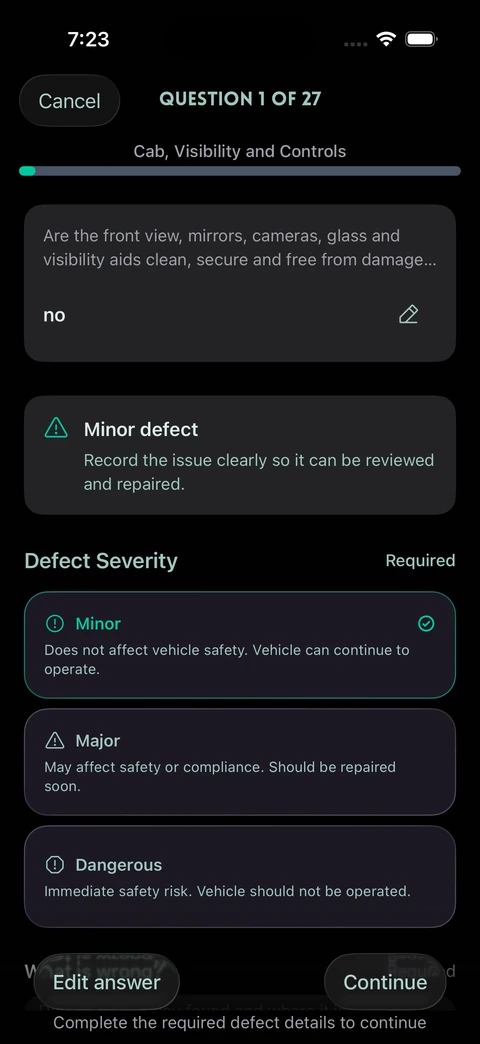
In AutoMauve a defect comes from the check itself. A failed answer creates it, with the driver’s note, photos and a severity of Minor, Major or Dangerous.
You move it through Acknowledged, In Repair and Rectified, and record what was done and who did it. Every status change is logged with a name and time.
From reported defect to rectified
- 1A driver fails a question during their check.
- 2They add a note and photo to show what’s wrong.
- 3You review it in AutoMauve and decide what happens next.
- 4The defect, the repair and every status change stay on the vehicle’s record.